On this page I hope to provide more information about IAGS. A lot of the material I have found is rather dry, but there was a lot of interesting stuff in there! But until I am able to summarize some of the more interesting things, I will just provide links to some of the sources I found useful.
The IAGS Logo
In today’s world of orbiting satellites and GPS mapping apps, we may take for granted the ability to easily access maps of any location in the world. The truth is these technologies are fairly recent, and the work that went into creating maps in the mid-20th century was a complicated and dangerous endeavor! The Inter-American Geodetic Survey (IAGS) is one of the most successful examples of these mapping efforts.
After 2 World Wars had proven to the U.S. Government that poor maps and war do not mix, and with the Cold War threatening the start of a new World War any day, the IAGS was born.
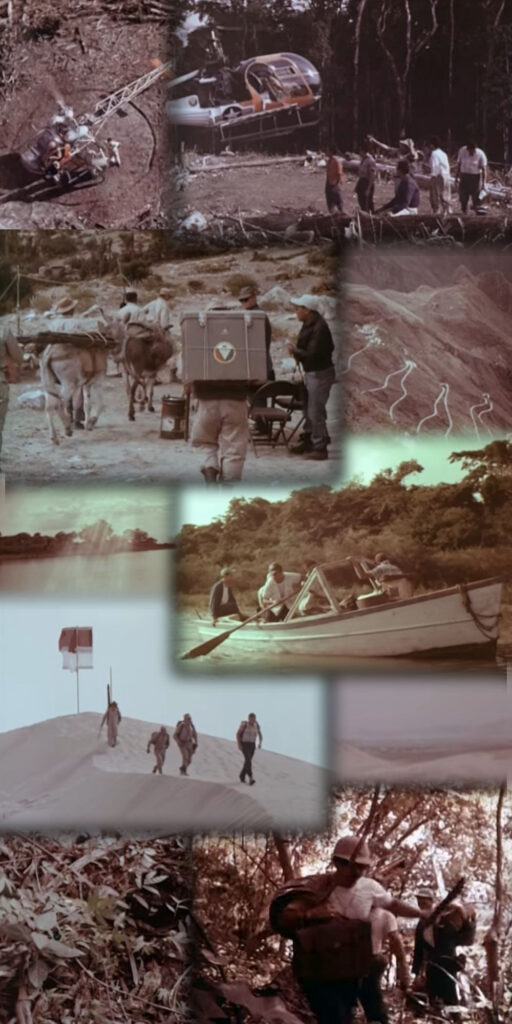
Travel to survey sites in South America was hazardous, with poor weather conditions and high altitude missions making helicopter travel risky. Helipcopter pilots’ jobs were made more complicated and hazardous by the fact that there were no reliable maps for the places they need to fly… otherwise they wouldn’t need to be there! After over 25 years of helicopter flights doing his duty for IAGS, that risk would catch up to Ray in the end.
But travel by helicopter was a luxury compared to reaching remote locations that required weeks-long journeys, often by foot. The routes to these far-flung locations involved boating (and even wading) through rivers, climbing treacherous mountains, trekking across barren deserts, and/or hacking through jungles where paths had to be carved out by hand with machetes.
The job of field cartography with IAGS was one for energetic and resourceful men. Survey parties were often required to live off the land, so work in IAGS was not just a matter of technical knowledge, but also required the survival skills of an experienced outdoorsman.